
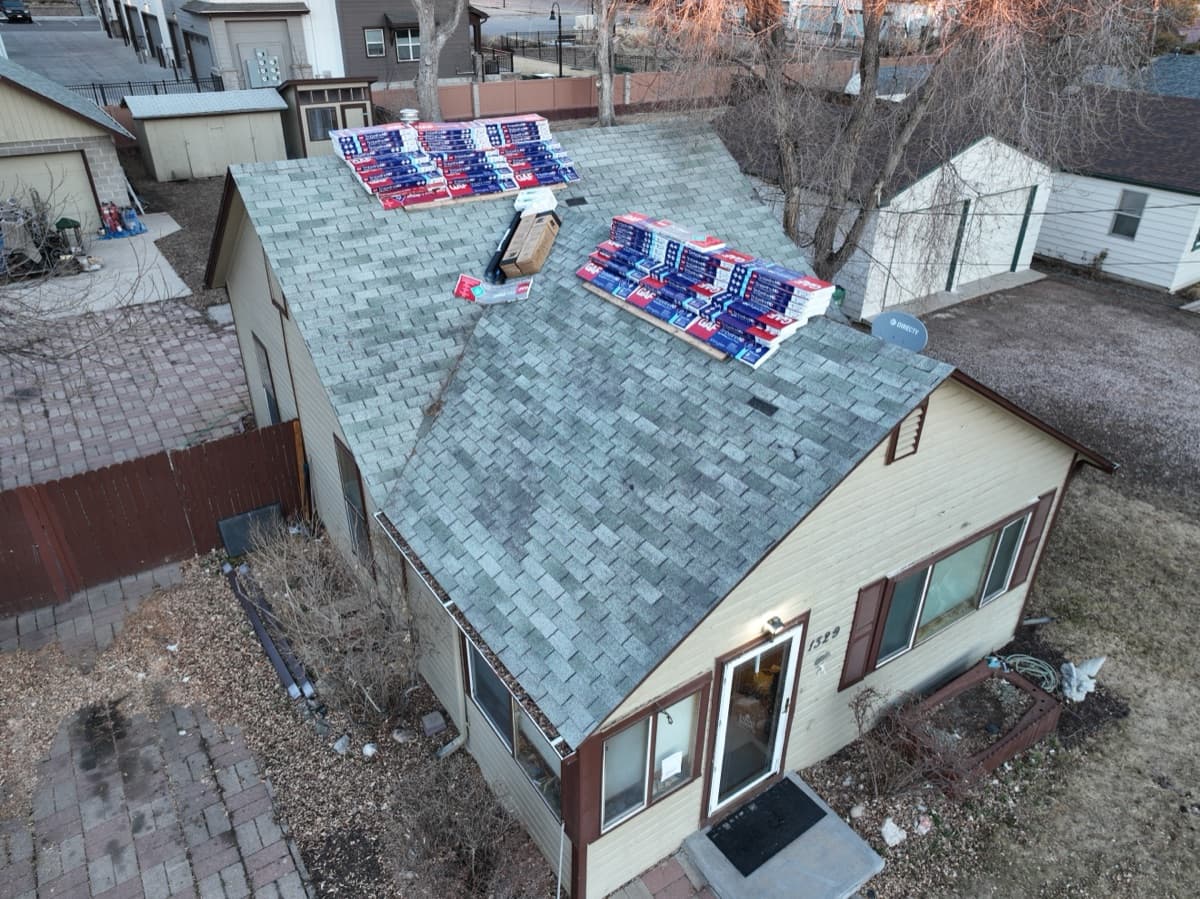
A Colorado roof works harder than almost any other roof in the country. Between the hailstorms in the spring, the intense UV at altitude in the summer, the pine needles piling up in the fall, and the brutal freeze thaw cycles all winter long, your roof is constantly fighting the elements. The good news is that a little maintenance done consistently each season can add years to the life of your roof and help you catch small problems before they become expensive ones.
You do not need to climb up on the roof yourself to stay on top of maintenance. In fact, we actively discourage most homeowners from getting on their own roofs. A trained roofer can cover a roof safely in minutes using proper equipment and footwear. Most homeowners cannot, and falls from roofs are among the most serious home improvement injuries. The good news is that most meaningful maintenance checks can be done from the ground with a pair of binoculars or simply by looking up at the right angles.
Here is a practical, season by season checklist tailored to Colorado's unique climate.
Spring Maintenance (April and May)
Spring is the single most important season for roof maintenance in Colorado because it follows the winter and precedes hail season. After the snow melts, do a thorough walkthrough of your property. From the ground, look for shingles that appear lifted, curled, or missing. Check the gutters for granules, which look like dark sand. A heavy accumulation of granules in your gutters after winter means your shingles are shedding their protective coating, which is a sign of accelerated aging. Check the flashing around chimneys, skylights, and vents for any visible separation or rust. Look at the fascia boards along the roofline for signs of rot or warping, which can indicate water was getting behind the gutters all winter. If you see anything concerning, schedule a professional inspection before hail season begins. schedule a free inspection
Summer Maintenance (June through August)
Colorado summers are surprisingly brutal on roofing materials. At the altitude of the Front Range, UV radiation is significantly more intense than at sea level, and temperature swings between a cool morning and a 95 degree afternoon can cause shingles to expand and contract repeatedly. In summer, focus on these items. Trim any tree branches that are hanging over or close to the roof surface. Branches scrape shingles during windy days and deposit pine needles and debris that hold moisture against the shingles. Clear accumulated pine needles and debris from valleys, which are the angled channels where two roof planes meet. Pine needles hold moisture and can accelerate shingle deterioration. Check that all attic vents are clear of bird nests, wasp nests, and debris. Blocked ventilation in summer leads to dangerously high attic temperatures that cook your shingles from below. After any hailstorm, do a walk around and check the same soft surfaces you would for a formal inspection, including your AC condenser, window screens, and deck furniture. Dents on those surfaces often mean your shingles took hits too.
Fall Maintenance (September and October)
Fall is prep season. Before the snow arrives, you want to make sure your roof is ready for the weight, the ice, and the freeze thaw cycles that are coming. Clean your gutters thoroughly after the leaves fall. Clogged gutters cannot drain properly, which means water backs up and sits at the roof edge during snow events. That standing water freezes and creates ice dams. Inspect the gutters themselves for damage from the summer hail season. Dented gutters restrict water flow even when they are technically clean. Check your attic insulation levels. Inadequate insulation is the primary cause of ice dams, and fall is the time to address it before the first hard freeze. If your roof is more than 15 years old, consider scheduling a professional inspection this fall to get an honest assessment of where you stand before the harsh winter season. roof repair services
Winter Maintenance (November through March)
In winter, your job is mostly to watch and respond rather than actively maintain. Do not try to shovel your roof unless you have significant structural concerns about snow load. Colorado snow is typically dry and light enough that it does not create dangerous weight loads on most well built roofs, and more homeowners injure themselves trying to shovel roofs than actually suffer structural failures. However, do watch for icicles forming along the eaves. Small icicles are normal. Large, heavy icicles extending well below the roofline are a sign of ice dam formation. You can use a roof rake from the ground to pull snow off the lower few feet of the roof near the eaves, which reduces the heat differential that causes ice dams. Never use a metal rake on shingles and never try to hack at ice dams with a tool. The damage you cause to the shingles will cost more than the ice dam repair.
What Only a Professional Can Assess
There are things that only a trained inspector can properly evaluate. Impact damage from hail is the big one. Hail damage looks like small dark speckles or soft spots in the shingle mat, and unless you know exactly what you are looking for, it is easy to miss entirely or confuse with normal granule loss. A professional also checks the condition of the underlayment beneath the shingles, the integrity of the roof deck, the seal on every boot and flashing penetration, and the condition of the ridge cap. These are not things you can assess from the ground or even from a quick look while standing on the roof. If it has been more than two years since your last professional inspection or since a significant storm, schedule a free inspection with Gates Enterprises. We inspect roofs across the Front Range at no charge and will give you a straight assessment with no pressure.
Colorado Specific Issues to Watch For
A few things are uniquely important in Colorado compared to other parts of the country. First, UV degradation at altitude is real. Shingles at 5,000 to 6,000 feet age faster from UV exposure than the same shingles at sea level. Class 4 impact resistant shingles with heavier construction tend to hold up better to both UV and hail. Second, freeze thaw cycling is relentless here. Denver can go from 60 degrees to 10 degrees overnight, and that happens dozens of times per winter. Each cycle stresses every seal, every flashing, and every shingle edge. Third, the combination of sun and elevation means your attic can reach extreme temperatures in summer, which softens the adhesive strips on shingles and causes sealing failures. Proper ventilation is the fix. Fourth, proximity to pine trees is a specific Front Range issue. Pine needles accumulate in valleys and gutters faster than most homeowners expect and need to be cleared several times per year.
Consistent seasonal maintenance is not glamorous, but it is the single best investment you can make in your roof beyond the initial installation. Catch problems early, keep your gutters and ventilation in good shape, and call a professional when you are not sure. That is the entire checklist. Gates Enterprises offers free inspections throughout the Denver metro area. Give us a call at (720) 766-3377 and we will take care of the rest See our best roofer in Denver page for certified roofing options near you..