
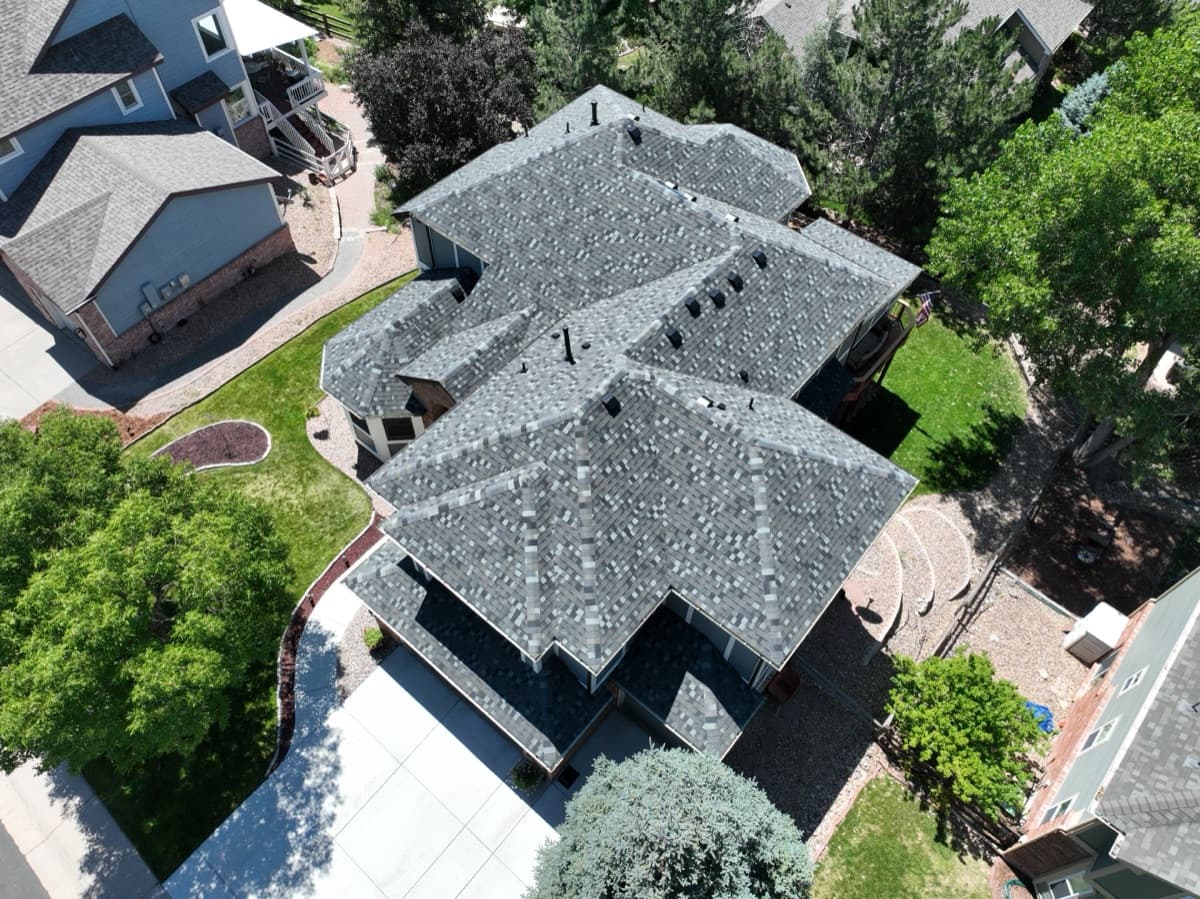
If you live along the Colorado Front Range, you already know the drill. A nasty storm rolls through, hailstones the size of golf balls pummel your roof for fifteen minutes, and then the sun comes back out like nothing happened. But something did happen. Your roof just took a beating, and now you need to figure out how to get your insurance company to pay for the damage.
Navigating hail damage insurance in Colorado sounds straightforward, but the reality is a lot messier than most homeowners expect. Insurance companies are businesses, and they are very good at minimizing payouts. That does not mean they are trying to scam you. It just means the process rewards homeowners who are prepared, organized, and know exactly what to do.
We have helped thousands of homeowners across the Front Range navigate this process over the past decade. Here is what we have learned.
Step 1: Document the Damage Before You Touch Anything
The first thing you should do after a hailstorm is grab your phone and start taking pictures. Walk around your entire property. Photograph your roof from the ground (or use a drone if you have one), your gutters, your siding, your window screens, your deck, your fence, and your car. Get close up shots and wide angle shots.
Do not try to make temporary repairs yet unless water is actively leaking into your home. If that is the case, do only what is necessary to stop the water. Cover the area with a tarp, place buckets under the leak, and photograph everything before and after.
Why does documentation matter so much? Because the insurance adjuster who shows up at your house will be looking at the damage days or even weeks later. Hail damage can look less severe over time as granules settle and debris washes away. Your photos from the day of the storm are your best evidence.
Step 2: Call Your Insurance Company (But Know What to Say)
Contact your insurance company to start the process as soon as possible. Most Colorado homeowner policies require you to report damage "promptly," and while there is no hard deadline in most cases, waiting too long can give the insurer a reason to push back.
When you call, keep it simple. Tell them a hailstorm hit your area, you have observed damage to your roof and property, and you would like to start the process. Do not speculate about the cost of repairs. Do not say "I think it might be minor." Just report the facts and let the process play out.
Write down your reference number, the name of the person you spoke with, and the date and time of the call. You will want this information later.
Step 3: Get a Professional Roof Inspection (Before the Adjuster Shows Up)
This is the step most homeowners skip, and it costs them thousands of dollars. Before the insurance adjuster comes to your property, get an independent roof inspection from a reputable roofing contractor.
A qualified roofer will climb up on your roof, document every single area of hail damage, and put together a detailed report. This gives you a clear picture of the actual damage before the adjuster arrives with their own assessment.
At Gates Enterprises, we offer free storm damage inspections across the entire Colorado Front Range schedule a free inspection. Our inspectors know exactly what insurance adjusters look for because we have been through this process thousands of times.
Here is a hard truth. Insurance adjusters are not always roofing experts. Some are excellent. Others are fresh out of training and may miss damage that a seasoned roofer would catch immediately. Having your own inspection report gives you leverage if the adjuster's assessment comes in low.
Step 4: Be Present for the Adjuster's Inspection
When the insurance adjuster schedules their visit, make sure you or your roofing contractor (or both) are there. This is not a formality. This is the most important moment in the entire insurance process.
Your roofer can walk the roof with the adjuster, point out damage that might be overlooked, and ensure everything is documented properly. If the adjuster misses something, your roofer can speak up right then and there.
We attend adjuster meetings with our clients regularly insurance restoration support. It is one of the most valuable things a roofing company can do for a homeowner, and it is something we include at no extra cost.
Step 5: Review the Insurance Company's Estimate Carefully
After the adjuster's visit, your insurance company will send you a written estimate. Read it carefully. Compare it line by line against the inspection report from your roofing contractor.
Common issues to watch for include missing items (they documented damage to one slope of the roof but not another), underpriced materials (using generic shingle pricing when your roof has premium materials), and excluded items like starter strip, ridge cap, drip edge, or ice and water shield.
If the estimate seems low, do not panic. This is normal, and it does not mean your coverage is denied. It means you need to push back.
Step 6: Supplement the Estimate If Necessary
If your roofing contractor's estimate is higher than the insurance company's estimate, your contractor can file what is called a "supplement." This is a formal request for additional funds, backed by documentation showing exactly what was missed or underpriced.
The supplement process is where having an experienced roofing partner really pays off. A company that does this regularly knows how to write supplements that insurance companies actually approve. A company that does not may leave money on the table.
At Gates Enterprises, we manage the entire supplement process for our customers insurance restoration support. Our team has helped homeowners secure additional funding for Colorado homeowners through proper supplementing. It is one of the reasons we have earned the trust of thousands of families across the state.
Step 7: Understand Your Deductible and Depreciation
Two things trip up homeowners more than anything else: the deductible and recoverable depreciation.
Your deductible is what you pay out of pocket. In Colorado, most homeowner policies have a deductible between 1% and 2% of the home's insured value. On a home insured for $500,000, that means a deductible of $5,000 to $10,000. This is your responsibility, and any contractor who offers to "cover" or "waive" your deductible is breaking the law.
Recoverable depreciation is the portion of your payout that the insurance company holds back initially. They will pay the "actual cash value" of your roof upfront, minus your deductible. Once the work is completed, you submit the final invoice and they release the remaining depreciation. Do not forget this step. It can be thousands of dollars.
Step 8: Choose the Right Contractor and Get the Work Done
[IMAGE: /images/projects/roof-replacement-project-colorado-1.webp | Roof replacement project in progress by Gates Enterprises in Colorado | 1200 | 900] roof replacement services
Once your coverage is approved, it is time to get the roof replaced. This is where choosing the right contractor matters enormously choosing the right contractor.
Look for a company with manufacturer certifications, proper licensing and insurance, a strong local reputation, and experience working with insurance companies. Not every roofer knows how to navigate the insurance restoration process, and hiring one who does not can leave you stuck with out of pocket costs that should have been covered.
Gates Enterprises is the only quadruple certified roofing company in Colorado, holding GAF Master Elite, CertainTeed Shingle Master Pro, Malarkey, and Emerald Premium certifications our certifications. That means we can install virtually any premium roofing product with the highest level of manufacturer warranty backing.
Common Mistakes That Kill Colorado Hail Damage Insurance
Let us talk about what not to do.
Waiting Too Long to File
Colorado has a statute of limitations on property damage filings, but your insurance policy may have stricter timelines. File promptly.
Not Getting a Second Opinion
If the insurance company's estimate seems low, get your contractor involved. You have every right to dispute the assessment.
Hiring a Storm Chaser
After every major hailstorm, out of state contractors flood into Colorado, knock on doors, and offer deals that sound too good to be true. They usually are. These companies often do subpar work, disappear before warranty issues arise, and sometimes create more problems than they solve.
Cashing the Check and Moving On
Some homeowners take the insurance payout and decide to pocket the money instead of fixing the roof. This can backfire badly. If another storm hits and causes interior damage, the insurance company may deny coverage because you never repaired the original damage.
You Do Not Have to Do This Alone
The insurance restoration process can feel overwhelming, but you do not have to figure it out by yourself. A good roofing partner will guide you through every step, from the initial inspection to the final supplement.
If you are dealing with hail damage in Colorado, give us a call at (720) 766-3377 or schedule a free inspection online schedule a free inspection. We have been doing this for over a decade, and we will make sure you get every dollar your policy entitles you to See our best roofer in Denver page for certified roofing options near you..